
I have been obsessed with Star Wars since I was seven years old. It ignited my love of stories and my love of movies. It’s been a core part of my being. Each era of the franchise has brought us something special that only Star Wars can do. It’s become one of our essential mythologies in the modern world.
But Star Wars has been broken. The Last Jedi and The Rise of Skywalker fractured the fandom and seems to have made the creatives at Lucasfilm and Disney afraid to move the franchise forward, relegating new stories to Disney+ series squeezed in between the established canon.
And yet, I was cautiously optimistic for The Mandalorian and Grogu, the first theatrical Star Wars movie in seven years. The Mandalorian helped launch Disney+ and quickly became a hit, so it makes sense that Disney would use these popular characters to resurrect the theatrical Star Wars experience.
So it pains me to say that The Mandalorian and Grogu is pretty disappointing. It’s not the worst thing Star Wars has released (shoutout Rise of Skywalker), but it’s emblematic of everything that’s plaguing the franchise right now. The movie fails on a story and character level that leaves it feeling forgettable and inconsequential. I walked away just wondering what the point of making this movie was.
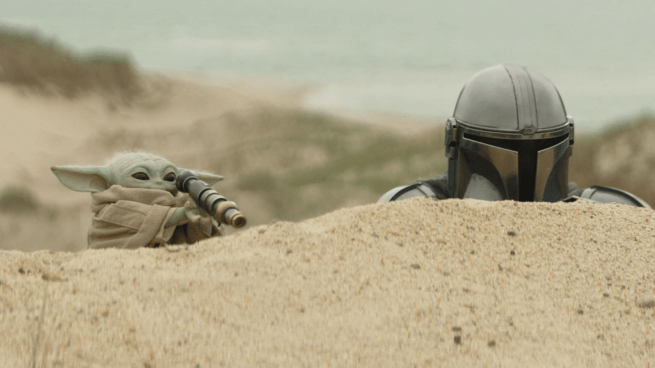
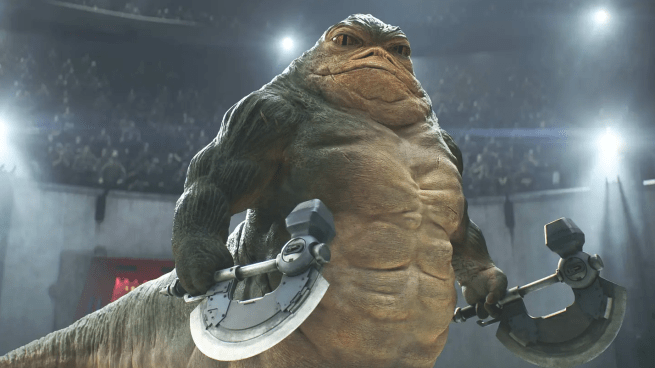
Much has already been said about how much the plot of this film feels like four episodes of The Mandalorian TV show stitched together. Din Djarin, our titular Mandalorian, is halfheartedly working for the New Republic and being sent on missions to capture former Imperial warlords. To get information on his next target, Mando must visit Jabba the Hutt’s cousins (inexplicably brought over from the unsuccessful Book of Boba Fett series), who first ask him to go rescue Jabba’s son, Rotta.
Two issues here: one, plots like this feel like badly drawn-out treasure hunts. Go here to get this thing that will lead you to some other thing that will make you go to this location to talk to this person who will tell you the next clue, and on and on. Two, there’s a lot of Hutts in this movie. I was never curious to learn about Jabba the Hutt’s extended family, and this movie doesn’t make the case for why I should care. The Hutts just aren’t that interesting of a species or characters to hinge so much of your movie on.
And there’s no sense of urgency driving Mando’s mission to hunt down these Imperial warlords. At least as far as this movie tells us, they’re not close to forming the First Order or starting to build Starkiller Base or actively trying to attack the New Republic. There’s no threat to our main characters. They’re just plot devices to get Mando and Grogu in place for the next action set piece. It’s uninspired storytelling, resulting in nothing of consequence happening in the 2+ hour runtime.
On a character level, Mando and Grogu have no growth or change – they’re exactly the same at the beginning of the film as they are at the end. We don’t learn anything new about either of them, and there’s no emotional hook for the audience to lock on to.
Director Jon Favreau has said that creating and working on The Mandalorian is like playing with toys or action figures. He’s fulfilling the dreams of his childhood imagination and how he connected with Star Wars as a kid. I can’t argue with that dream, but in execution, the audience loses emotional connections to characters that are imagined in this way without an equal emphasis on character development.
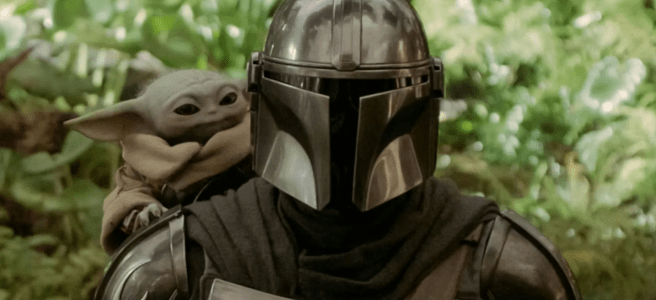
Din Djarin, our main character, is part of a sect of Mandalorians that never remove their helmets. It’s an interesting concept in theory, but in practice, it means we rarely see our main character’s face. We can’t see him laugh, cry, get angry, be afraid, smile, or frown. We must rely on his voice to understand his emotions. Which has been done before in Star Wars, of course. Look no further than Darth Vader. He had immediate and long-lasting presence from behind his mask. A huge part of that was James Earl Jones’s incredible voice, so powerful and emotional in his dialogue. But something about Pedro Pascal’s voice performance as Din often feels emotionless, and I can’t help but think it would feel less so if we could see his face.
When we do see his face in The Mandalorian and Grogu, it’s for about five minutes in one action scene. Because it’s forbidden for him to remove his helmet, every time we see Pedro Pascal’s face, he’s either angry or crying. Pedro Pascal has a very expressive face (he’s a very good actor), but restricting him to those few emotions limits his character.
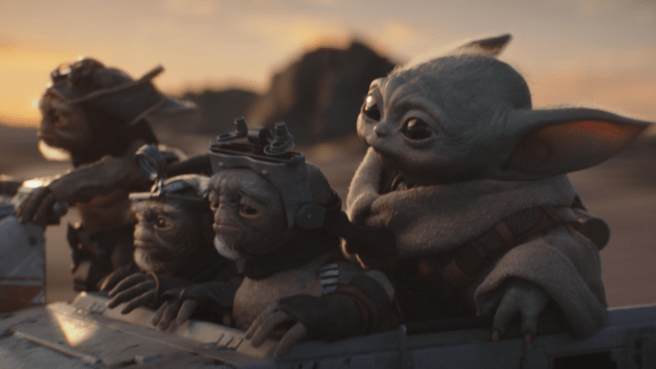
Grogu, on the other hand, is an extraordinary act of character design (and a marketing and merchandise department’s dream). A true sensation when he first appeared, he’s just a 50-year-old baby. But because he’s part of Yoda’s species, we expect Grogu will live to be 800-900 years old. That means his infant phase will last a long time. It could be decades before he learns to talk or to develop any kind of personality or characterization besides being cute. By design, he can’t grow too much too fast, leaving him in a permanent state of infancy for the foreseeable future.
Which means it’s unlikely Grogu will learn to talk anytime soon. Star Wars has seen plenty of characters that don’t speak languages we understand, but by having them interact with characters that do, we’re able to subconsciously understand their conversations. We don’t understand Chewbacca, but Han Solo does. C-3PO understands R2-D2. Rey understands BB-8. Those relationships allow the audience to connect with all these characters, regardless of whether we fully understand their language. But Mando doesn’t understand Grogu, who communicates in babbles, coos and grunts. Their physicality toward each other communicates a lot, but an inability to really talk with each other hinders the audience’s ability to connect to their relationship on a deeper level.
So we have faceless Mandalorian and speechless Grogu as our two main characters. Don’t get me wrong, they’ve both had outstanding moments of emotion and connection across the series, but the movie really highlights the limitations of their core character designs.
Star Wars has historically also excelled in its ensemble casts, but The Mandalorian and Grogu doesn’t put any effort into its supporting characters. Luke, Han, Leia, Chewbacca, Darth Vader, R2-D2, and C-3PO all instantly became icons when the original film was released. Jar Jar Binks was memorable – for better and worse – when The Phantom Menace premiered. Rey, Finn, and Poe were all very exciting new characters from the sequels too.
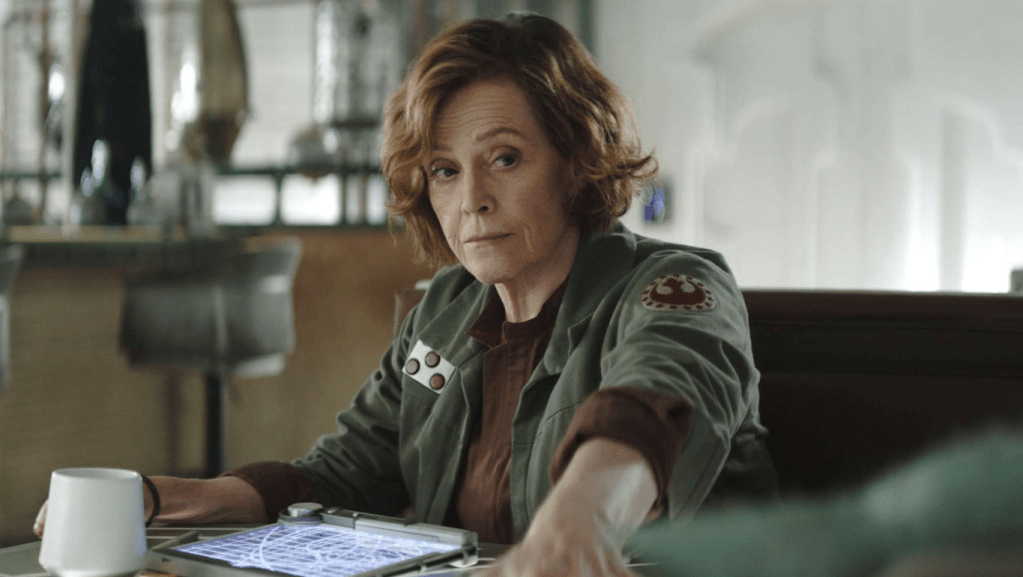
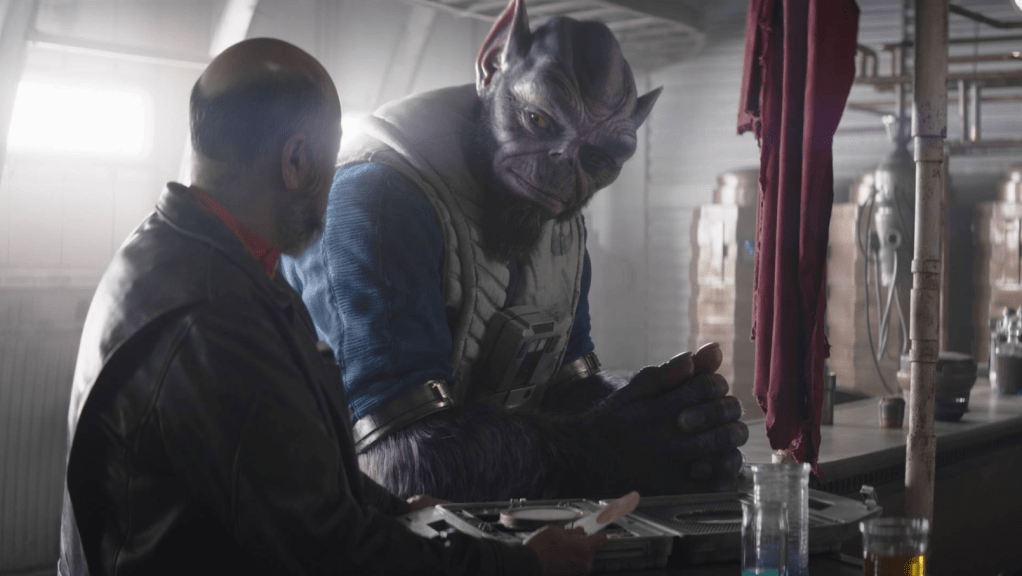
But for The Mandalorian and Grogu, other than Rotta the Hutt, the supporting characters mostly feel like cameos. Sigourney Weaver has like three scenes and gets to fly an X-wing once. Zeb, one of the main characters for four seasons in the animated Star Wars: Rebels, has like 10 lines and isn’t mentioned by name until an hour into the movie. Again, they’re not so much characters as they are action figures.
It’s not all doom and gloom for The Mandalorian and Grogu. It has moments when it shines, particularly in a sequence where Grogu is separated from Mando and has to make his own decisions about what to do while he’s on his own. It really shows off how successful the puppetry work is on characters like Grogu and the Anzellans and the importance of practical effects in our modern CGI age. Most of the action scenes are decent and entertaining, particularly the opening AT-AT attack and Din’s fight with the giant water serpent. And Ludwig Goransson’s score is excellent, building on his themes from the TV series and bringing new sound to the Star Wars landscape while still feeling familiar.
Ultimately, I just want more from a Star Wars movie. Star Wars movies are special, and The Mandalorian and Grogu felt forgettable. The Star Wars galaxy is a limitless playground where any kind of story can be told. If you’re really that interested in Hutts and the crime syndicates, really commit to a crime thriller. GoodFellas in Star Wars? Sign me up. Give me a Star Wars horror movie, a Star Wars romcom, Star Wars Ocean’s 11! The possibilities are endless.
I’m more hopeful for next year’s Star Wars: Starfighter because it’s a new story with new characters set after the sequel trilogy, a wide-open galaxy. My hope is that it’s bold and not afraid. Star Wars is at its best when it’s bold. George Lucas’s original design was bold. Even when the bold swings don’t work perfectly, it’s better than not taking a swing at all. The prequels were bold. The Last Jedi was bold. Andor was bold. The Mandalorian and Grogu was safe. Star Wars deserves better.


