

We’ve finally reached the end of my top 25 movies of the century so far! This project has been so much fun, giving me an excuse to revisit some amazing films and really consider why I think they’re so special. I tried to balance my personal favorites with those undeniable masterpieces, reaching a final list that feels representative of me.
Thanks to my favorite podcast, The Big Picture, for the inspiration to make my own list. Revisit numbers 25-6 before you check out the top five.
Without further ado, here are my top five movies of the 21st century so far!
5. The Social Network (2010)
Drop the “The.” Just “Facebook.” It’s cleaner.
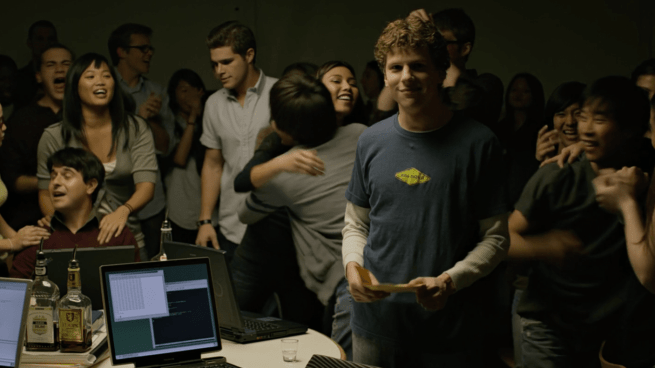
Watching The Social Network in 2025 is like watching the first 20 minutes of a horror movie before the villain starts killing everyone. Despite the horrors that persist, watching the chaos and creativity that led to the creation of Facebook in this movie sheds light on how it became a juggernaut.
The movie is not particularly kind to Mark Zuckerberg. One question it keeps coming back to is whether Mark is an asshole or whether he just wants to be. But it also shows him being angry, annoying, selfish, petty and vindictive throughout the runtime. Jesse Eisenberg’s performance as Mark is incredible, putting on the façade of a pompous know-it-all while giving us glimpses of the insecurities underneath, of someone who just wants to belong. That being said, the characterization of Mark in the movie still feels kinder to him than how many of us see him now.
The rest of this cast is excellent too. Armie Hammer starring as the Winklevoss twins is so great, and Andrew Garfield is the real scene-stealer as Eduardo Saverin.
Aaron Sorkin’s script is easily one of the best of the decade. It effortlessly bounces us back and forth between three timelines – the main story and two separate depositions. It keeps you invested, especially at moments where characters are completing sentences between timelines. But you’re never lost, and the writing is so clear and sharp that you can’t wait to hear what happens next. And the whole movie flies by; there’s no moment that feels unnecessary or like it needed to be cut. The opening scene alone is electric, and it’s just two people talking at a bar.
The Social Network also acts as the announcement of Trent Reznor and Atticus Ross as a top tier composer duo. Their score for this movie is hypnotic and propulsive. They take what is essentially a movie about a bunch of guys staring at computer screens and sitting in deposition rooms and make it feel more alive and thrilling than a Mission: Impossible movie.
Facebook in 2025 is filled with fake news, people arguing with each other, AI images, and lots of baby pictures. Nothing Mark Zuckerberg could have imagined when he created the platform in 2003. But The Social Network suggests that something that was born out of spite maybe wasn’t ever going to be a digital utopia we needed.
4. La La Land (2016)
Here’s to the fools who dream.
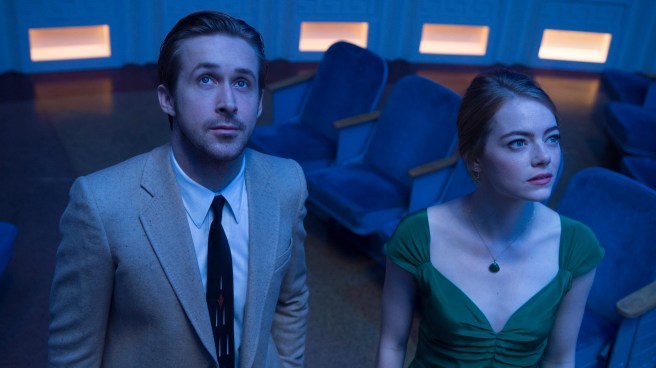
La La Land is for the dreamers. To the fools who fight every day to achieve their dreams. To the ones who learn that dreams and passion are often a double-edged sword and that they don’t always end up happening exactly how you think they will.
Both Mia and Sebastian learn this truth in La La Land. Mia, an aspiring actress, and Sebastian, an aspiring jazz musician, are drawn to each other through their passion and excitement for their futures. They’re both determined to do whatever it takes to succeed, celebrating each other’s wins and learning how they can manage different levels of success.
La La Land is a dreamlike joy of a film. It’s a love letter to Hollywood, to classic musicals like Singin’ in the Rain or An American in Paris, while also giving us a peek behind the curtain of the work that aspiring artists go through to reach their dreams. The film is big and over the top, with fantastical moments of dancing, floating, and dreaming. But it balances those moments with more grounded elements, held together through the excellent performances from Emma Stone and Ryan Gosling. They have such great chemistry and bounce off each other so effortlessly, letting us see the desire, drive, and pain in both Mia and Sebastian.
By definition, musicals live or die based on their music. La La Land luckily has a truly gorgeous score and soundtrack. Justin Hurwitz’s music sounds timeless. It’s ethereal and joyful, bursting with life in the jazz-influenced moments and making your heart swell in the moments when the full orchestra kicks in. “Mia and Sebastian’s Theme” is a beautiful piece of music, one that’s full of hope and melancholy.
In a time when so many movies feel like they’re made of shades of brown and grey, La La Land stands out for its vibrant colors. The opening sequence juxtaposes brightly colored outfits against the grey cement of an interstate overpass, and so many scenes are lit with blues, purples, reds and greens. Then the finale explodes with more color in an extended dance sequence, travelling through exquisite sets that would fit right at home in a musical from the 1950s.
Damien Chazelle is easily one of my favorite directors working today. Had I not given myself guidelines to only have one movie per director on this list, he would have shown up more frequently. His breakout film Whiplash is another absolute masterpiece, and I adore both First Man and Babylon as well. He clearly loves Hollywood history and has a special connection to music that comes through in all his films. He’s one of a handful of directors that I will always be excited to see what he does next. But La La Land will always be something incredibly special.
3. Before Sunset (2004)
Memory is a wonderful thing if you don’t have to deal with the past.
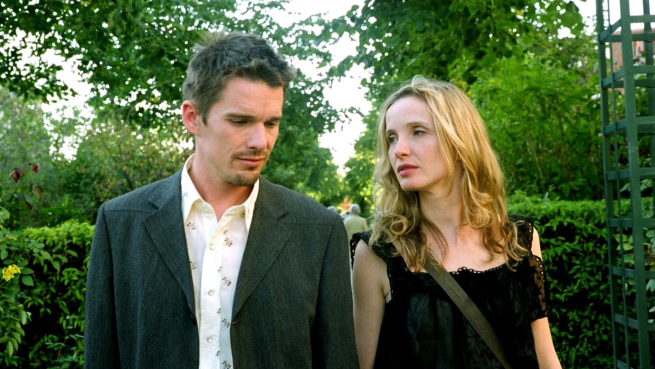
Richard Linklater’s Before trilogy is a miraculous experiment in time. In 1995’s Before Sunrise, we’re introduced to Jesse and Celine, two people in their 20s who meet on a train in Europe and spontaneously get off in Vienna and spend the night walking through the city, getting to know each other, and having conversations about life and love as they make the most out of this one night together. It’s incredibly romantic and enthralling, and it’s one of the best movies of the 1990s.
Nine years later in Before Sunset, we catch up with Jesse and Celine in Paris. We learn what did or didn’t happen after the end of Before Sunrise and watch them reconnect. Now in their 30s, and with the benefit of nine more years of life behind them, they see the world in a different way. They have incredible conversations about memory, about how small moments can leave a powerful mark on a person. They wonder if this meeting is a second chance at long lost love, or if it’s a reminder of how they’ve changed in those nine years, making them question if they’re the same people they were in Vienna.
The conversations Jesse and Celine have are often hypnotic. They’re both so passionate about what they love and what frustrates them about the world. They flow so naturally in and out of these conversations that they almost have a rhythm to them, and in the back of your head you know no one really talks like this in real life. But it doesn’t matter because you’re so drawn into the dialogue. It’s like magic how their conversations sometimes feel more electric than any action scene. I want to live inside a Jesse and Celine conversation.
The movie follows Jesse and Celine in near real time – Jesse has a plane to catch, giving their time together a countdown, but they keep finding excuses to stay together just a few more minutes. It’s incredibly romantic. As the moments tick by, both Jesse and Celine’s walls come down, falling back into the easy chemistry they had in Vienna. The yearning that pulls them toward each other is undeniable. They beg you to wonder if this meeting will end the same way their first did.
But you’ll just have to watch to find out.
2. Parasite (2019)
This is so metaphorical.

There are about four different movies packed inside Parasite, the South Korean masterpiece from director Bong Joon Ho. It’s a family comedy, a heist movie, a class drama, and a thriller (with a touch of horror mixed in). But what makes Parasite so special is how perfectly calibrated each of those tones are and how quickly and expertly it pivots in between them.
The film is the story of the Kims, a poor family taking odd and menial jobs to barely make ends meet. They’re stealing wi-fi from nearby neighbors and stores and dealing with unwanted stink bugs all over their apartment. Eventually, they find themselves intertwined with the much wealthier and successful Park family, and the culture clash reveals more than either family could imagine.
The technical aspects of Parasite are just astonishing. It’s an expertly constructed movie, literally. The production design and the sets are stunning, and the way they illustrate the themes of the film are one of my favorite aspects. The editing and pacing give the film a propulsive drive, making the audience feel like they’re barreling down a hill toward each twist in the plot.
A repeated phrase from one of our main characters is how “metaphorical” everything seems. Parasite is absolutely a metaphorical movie, and repeat viewings make the metaphors so clear. Everything from where characters are placed in the frame, the lines of windows and walls acting as visual divides between them, and especially how stairs are used to depict mobility are all easy to understand once you know what to look for and make small moments much more impactful.
So many of the visuals in Parasite have been burned into my brain since first seeing it in 2019. A thrilling sequence with a peach and a bloody tissue. A spectacular reveal in a basement. A blinking light. A garden party. But nothing has left a bigger mark on me than a shot from this movie of someone coming upstairs into a kitchen at night. While Parasite is not a horror movie, that moment is one of the most terrifying images I’ve ever seen. And it’s perfect.
While made in South Korea, the themes and ideas in Parasite are universal. It’s one of those movies where you need to know as little as possible when you watch it for the first time. I promise you won’t be disappointed.
1. The Lord of the Rings: The Fellowship of the Ring (2001)
All you have to decide is what to do with the time that is given to you.
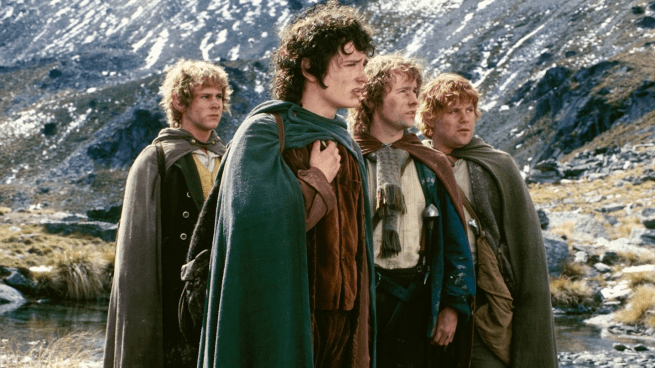
Anyone who knows me well probably could have guessed this would be my number one pick for this list. This movie (and its sequels) changed my life. More than any other movie – except maybe the original Star Wars trilogy – The Lord of the Rings made me fall in love with movies, and especially with how movies are made. The amount of talent, passion, and art that went into these movies is one-of-a-kind.
The Lord of the Rings is an incredible pivot point in cinema history. It’s part of a lineage of cinematic epics and sword-and-sandal movies like Lawrence of Arabia, Ben-Hur, and Gladiator, stories of massive scope and scale, with every scene exploding with dramatic visuals. It’s also one of the first examples of 21st century franchise movie making, setting the stage for the boom of fantasy and science-fiction storytelling that has been so dominant over the last 25 years.
It’s kind of a miracle that The Lord of the Rings got to be made at the right time by the right people. The filmmakers used classic visual effects practices, like giant miniatures for locations, genius forced perspective tactics to make hobbits three feet tall, and intricately made costumes, weapons, and armor. But the filmmakers also pioneered new technology for computer generated images, creating massive armies, creatures, and one of the first completely digital characters in Gollum. The time dedicated to these effects, and the talent behind them, keep the movie from looking like a video game or uncanny mess of actors clearly performing on empty greenscreen stages placed in digital backdrops.
While it’s impossible to think about The Lord of the Rings trilogy as separate movies, there is something about Fellowship that makes it stand out to me. It’s so effective at laying groundwork in its worldbuilding, character relationships, and emotional stakes.
In any story about saving the world, the audience must understand what is worth saving and what our characters are fighting for. Fellowship lets us spend so much time in the Shire, showing us why Frodo and Sam love it so much, and why they must leave their home to protect it. They don’t seek fame or reward; they act out of love for their home and their neighbors.
The Fellowship’s journey in this film takes us through more of Middle-Earth than the other two films, so we have an opportunity to visit various locations and see how these cultures live and exist. We see differences in architecture, weaponry, clothing, and customs when visiting the realms of Elves, Dwarves, Men, and Hobbits. And those differences make it more meaningful that the Fellowship is united by their task, regardless of how different they feel from each other.
The Fellowship of the Ring, and the rest of The Lord of the Rings trilogy, is a masterpiece of storytelling, combining practical effects with cutting-edge technology, an incredible cast, and an iconic story, set against the stunning backdrops of New Zealand. It’s easily one of the greatest accomplishments and the greatest film of the 21st century.
I hope you’ve enjoyed reading through my list of my 25 favorite movies of the 21st century so far! I hope some of your favorite movies are here, or that you choose something from this list you haven’t seen and find a new movie you can love. I can’t wait to discover the next movies that I’d include on this list over the coming years. Thanks for reading!

 Movies with Mitchell