

Welcome to another installment of the 25 best movies of the 21st century so far. We’re in the top 10 now, so all of these from here on out are absolute bangers. Make sure you’ve seen numbers 25-11 below before diving into numbers 10 through six.
10. Get Out (2017)
Now, you’re in the sunken place.

Saying that Get Out was a game changer for horror in the 21st century is an understatement. It set the bar for how filmmakers could use horror to interrogate modern social and political ideas and helped popularize the ongoing trend of “elevated horror.” And for all that to happen in a directorial debut is impressive enough, but for that director to be Jordan Peele – someone known primarily for a sketch comedy show – made Get Out even more monumental.
On the surface, Get Out is the story of Chris, played by Daniel Kaluuya, a Black man who goes with his white girlfriend on a trip to meet her family. Once there, Chris quickly realizes things aren’t what they seem and discovers something sinister happening in this picturesque community. But under all that is critique of racism, racial politics in contemporary America, and neoliberalism. It’s a metaphor that shows the insidious nature of racism and how racial stereotypes persist in our society, no matter how far we’ve come as a country and society.
And it’s clear that Get Out struck a chord with audiences, particularly in how it has permeated pop culture since its release. The sunken place is a common term that almost instantly entered our collective lexicon to describe systemic and institutional ways minorities feel trapped in our modern world, and lines like “I would have voted for Obama for a third term, if I could” have become shorthand to call out performative liberalism online.
The movie gave Daniel Kaluuya his breakout moment in Hollywood. Kaluuya had already been acting for a long time before Get Out, but mostly in small supporting roles and on British television, so this movie really put him on the map. He delivers an incredible performance, bringing the audience along as he observes what first seems to be weird eccentricities of the people he’s around but leads to true shock and terror. So much of his performance is in his eyes, including the movie’s most iconic moment.
From the moment the film begins, you’re hit with a sense of unease, that something is terribly wrong and it makes you feel so uncomfortable until the big reveal. It’s a masterclass of tension-building, something Jordan Peele has continued to deploy in his other films like Us and Nope.
Also I’ve got to shoutout that this was filmed in Alabama!
9. Call Me By Your Name (2017)
Is it better to speak or to die?

Watching Call Me By Your Name almost feels like a dream, like laying in a hammock on a warm, lazy summer day drifting in and out of sleep. It cultivates a beautiful mood and lets its world slowly wash over you.
The film follows Elio, a young man who spends his summers in Italy with his family, and Oliver, a graduate student working with Elio’s father. At first, they try and stay out of each other’s way, attempting to ignore the connection that’s growing between them. In many ways it’s a traditional coming of age story for Elio, full of love and loss and learning how to grow up.
Like Get Out was Daniel Kaluuya’s Hollywood breakout, Call Me By Your Name announced the arrival of Timothee Chalamet. After supporting roles in a handful of movies, including Christopher Nolan’s Interstellar, his performance in this film skyrocketed him to stardom (and his first Oscar nomination). His performance is quietly intense, the kind of acting that lets you know how much is going on in the character’s mind without explicitly saying so. There’s a soulful ache in Elio that is palpable in every scene as he tries to understand himself and the people around him. The final shot of the movie holds on Elio’s face has he experiences a range of emotions, and you can see the entire journey so clearly in Chalamet’s performance.
Armie Hammer is also great in his role, and he and Chalamet have amazing chemistry. But it’s Michael Stuhlbarg who nearly steals the show from the two leads. He plays Elio’s father, a man who is more observant than he appears, and gets a gorgeous monologue that will break you down and put you back together in one scene.
In the end, the movie reminds us of the importance of heartbreak; that it’s okay to feel bad when something ends and to live in that sadness for a time. Our lives are made up of good and bad moments, and they can be equally meaningful. Moments of grief help you understand that what happened meant something special, and they make the good times that much more powerful.
8. In the Mood for Love (2000)
Feelings can just creep up like that.
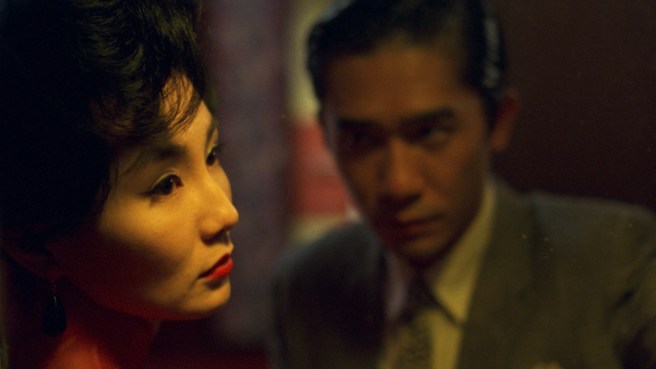
Trying to explain In the Mood for Love to someone who hasn’t seen it is like trying to explain the color blue to a blind person. It’s something you just have to experience to fully understand. Directed by iconic Hong Kong filmmaker Wong Kar-Wai, the film is a masterclass in crafting striking images; the storytelling is driven by its visuals and includes minimal dialogue. Even though the film is just under 100 minutes, by the end you feel like you’ve lived lifetimes with these characters.
In the Mood for Love follows a man and a woman who live in neighboring apartments. They’re both married to other people, but their spouses both travel frequently for work so they begin spending time together. They soon discover that their spouses have been having an affair with each other, so they begin to bond over their shared betrayal while developing deeper connection of their own.
If you had to describe In the Mood for Love with one word, I would use yearning. The main characters don’t experience love at first sight or get swept away into a passionate affair. Instead, it’s the kind of feeling that sneaks up on you. The kind of love where you meet the right person at the wrong time and have to grapple with attraction from a distance. Glances speak volumes. Small gestures scream with desire.
The movie chooses to be minimalist with its score, with one main theme that recurs over and over. But every time it appears, it almost puts you in a trance. There’s such longing in the song and it pulls at something deep within you. It gives the film a dreamlike quality, pulling you out of time and just into existence with these characters.
The stars of the film, Maggie Cheung and Tony Leung, are truly magnetic and deliver two powerhouse performances. Every aspect of the production, from the framing, cinematography, coloring, and especially costuming work together to draw your eye to them. Maggie Cheung’s dresses are particularly breathtaking. It’s a true work of art and the kind of movie that lives with you long after it’s over.
7. Little Women (2019)
Women, they have minds, and they have souls, as well as just hearts.

Greta Gerwig is one of the most exciting directors and writers working today. I easily could have picked any of the three films she’s directed for this list. Barbie was a cultural phenomenon and is genuinely hilarious, and Lady Bird, Gerwig’s first major film, is an outstanding coming-of-age story about mothers and daughters. But there’s something about Little Women that puts it barely above the other two for me. It’s a beautiful adaptation of a beloved story and a true joy to watch.
One of the smartest aspects of Gerwig’s adaptation is how she folds the story’s two timelines on top of each other. Instead of going chronologically through the entire story, she bounces back and forth between the March sisters’ childhood and their young adulthood. This decision allows the audience to really feel how the characters have changed over the years and brings surprising connections between the two timelines to the surface. The structure has the biggest impact on Beth’s storyline. And the filmmakers made the brilliant choice to use opposite color palates for each timeline to help the audience visually understand where they are in the story.
Little Women features an all-star cast. Saoirse Ronan as Jo March is instantly iconic, and Florence Pugh’s performance as Amy changed how audiences understood that character for the last 180 years. Emma Watson and Eliza Scanlen round out the March sisters and each have moments to shine. Laura Dern is a warm and reassuring presence as their mother, Marmie, and Timothee Chalamet brings such a mischievous quality to Laurie – his chemistry with both Saoirse and Florence is wonderful.
Another aspect of Little Women that I love is Alexandre Desplat’s score. It’s magical and sets a perfect tone for the film, balancing the whimsy and joy with the more serious and somber moments.
There’s something so cozy and familiar about Little Women; each rewatch rewards you with new details coming to the forefront and a chance to revel in your favorite moments. Each time you return to the story it really feels like visiting family and being part of each other’s lives.
6. Moonlight (2016)
At some point, you gotta decide for yourself who you gonna be. Can’t let nobody make that decision for you.
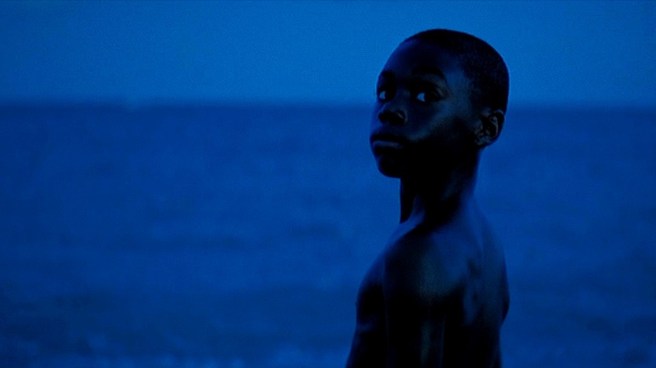
Representation is one of those words that has become politicized, a buzzword that gets thrown into conversations as a talking point because people feel like it needs to be there. But representation really does matter, and it’s movies like Moonlight that prove it.
Less than a decade old, Moonlight has already become a capital I “Important” movie. It won Best Picture at the Oscars, the first from independent studio A24 to do so. It was part of the legendary Oscars mix-up with La La Land. But it’s also important because it’s a movie about a young, Black, gay boy trying to find himself in a world full of expectations that don’t match what he wants. It’s the story of a boy who so desperately wants to fit in but knows he doesn’t, so he tries to make himself as small as possible until he molds himself into something that makes him feel safe, something he feels like the world says he should be.
Moonlight tells the story of Chiron, a Black boy growing up in a poor neighborhood of Miami. The movie is divided into chapters where we follow Chiron at three different stages of his life, as a young boy, as a teen, and as a man. Throughout the film, Chiron struggles with his identity – as a Black man and his sexual identity – trying to figure out who he wants to be and who he believes his community says he should be.
Along the way, he finds a mentor of sorts in Juan, a drug dealer played by a phenomenal Mahershala Ali, who takes Chiron under his wing, gives him attention and compassion. Along with his girlfriend Teresa (Jenelle Monae), Juan acts as a life raft for Chiron in his younger years, a place where he can be himself and rest from the chaos around him. And then there’s Kevin, a boy Chiron’s age who is kind to him and who is able to break through Chiron’s walls and make a connection with him.
Moonlight buries itself in your soul. It makes you feel the ache, the tenderness, the loneliness, the fear with every bone in your body. While its story presents a specific point of view, it’s impossible to watch Chiron’s journey and not be filled with empathy and find parts of his story that resonate with you. And that’s the magical thing about movies – they can show you stories and lives that are so unlike your own and still make you understand their journeys and find the ways we’re more alike than we are different.
Only five more to go! Excited to bring this series to a close.

 Movies with Mitchell
One thought on “Top 25 movies of the century so far: No. 10-6”