
Over the past 100 years, the name Disney has become synonymous with animation. Beginning in 1937 with Snow White and the Seven Dwarfs, the company has released 62 animated feature films, many of which are among the greatest and most beloved animated movies ever made. For decades, children and adults alike have been enchanted by the stories, songs and characters that have come from the House of Mouse.
Every studio with a history as long and storied as Disney has peaks and valleys, rises and falls. For every Casablanca or Jurassic Park, there’s a Space Jam 2 or Cats. So what is the ultimate peak of Disney Animation? I’d argue that there’s a very clear answer: 1991’s Beauty and the Beast.
From the animation to the storytelling and the music, Beauty and the Beast perfected the Disney magic and is still the gold standard to which any new film is measured.
Beauty and the Beast is a cornerstone of one of the most successful and beloved sets of films in any studio’s history. The Disney Renaissance from 1989-1999 gave us iconic characters, songs and stories that are celebrated to this day. Prior to the Renaissance, in the 1970s and 80s, Disney lost some of its spark with a series of less successful releases (although still beloved by many) like The Aristocats, The Rescuers and The Black Cauldron. But The Little Mermaid was a return to form, bringing back the magic that the studio had harnessed during its Golden and Silver Ages with hits like Snow White, Pinocchio, Cinderella, Peter Pan and Sleeping Beauty.
The Little Mermaid was followed by The Rescuers Down Under, an often-forgotten blip during the Renaissance (and Disney’s first theatrically released sequel). But then came Beauty and the Beast, which proved that magic of The Little Mermaid wasn’t a fluke and announced that Disney was back on top. Disney would then go on a tear of hits with Aladdin, The Lion King, Pocahontas, The Hunchback of Notre Dame, Hercules, Mulan and Tarzan all coming in a 10-year period.
Post-Renaissance, Disney took some chances with new types of stories and new technology, with mixed results. Some movies of the early 2000s would become beloved cult classics, like The Emperor’s New Groove, Atlantis: The Lost Empire and Treasure Planet, while others really missed the mark in many ways (Dinosaur, Home on the Range, and Chicken Little – I’m looking at you).
But once again, Disney returned to the strengths they found during the Renaissance, leading to a new era of worldwide hits like Princess and the Frog, Tangled, Frozen, Moana and Encanto.
Fascinatingly, each era of creative success begins with a princess. Snow White started it all, Cinderella began the Silver Age post-World War II, The Little Mermaid and Beauty and the Beast ushered in the Renaissance, and Princess and the Frog kicked off the latest era of Disney’s revitalization.
So it’s easy to see how foundational princesses are to Disney and why they remain one of the strongest associations with the brand today. But when you think about it, Snow White, Cinderella, and Sleeping Beauty were the only three princess-led films Disney produced in their first 50 years. The Little Mermaid rejuvenated princesses for Disney, with Ariel bringing the archetype into the modern age. Ariel had more agency and personality than Snow White, Cinderella, or Aurora did – a trend that would continue with Belle.

Belle is the ultimate Disney princess. Like Cinderella (and others that came after her), she does not begin as a princess. She’s just an ordinary girl living in her poor provincial town. She is smart, kind, knows what she wants and has dreams for her future. Throughout the film, she takes decisive actions that move the story forward, from going out to rescue her father, exploring the castle, and tending to the Beast after he’s injured. She has a heart that sees beneath the surface of other characters, like the Beast and Gaston, to see their true selves. She chooses the Beast, and her actions break the spell over the castle.
Belle and Ariel ushered in a new era of princesses. Jasmine, Pocahontas, Mulan, Tiana, Rapunzel, Anna, Elsa and Moana all share aspects of the modern princess framework formed in The Little Mermaid and Beauty and the Beast.
Part of that framework included a modernization of storytelling for Disney. How we tell stories and what we expect from a movie in terms of exposition, pacing and characterization has changed over the last 100 years. An action movie from the 1950s can feel much slower than the latest Mission: Impossible or Fast and Furious. And Disney movies have gone through a similar transition.
In Cinderella, which came out in 1950, the entire ball sequence where Cinderella meets and dances with the prince, the clock strikes midnight and she loses her shoe, all happens in about five minutes. Not enough time is given to show what kind of connection Cinderella has with the prince, especially when they’ll end up married by the end of the movie. (Also so much of Cinderella’s runtime is dedicated to mice).
You can even argue that The Little Mermaid falls victim to some rushed plot points, especially within the romance between Ariel and Eric. Ariel sees Eric once and rescues him from the sea, and that’s all it takes for her to love him. Now yes, Ariel does have a fascination with the human world in general, so Eric is not the sole reason for wanting to trade her fins for feet, but he’s a not insignificant part of that decision.
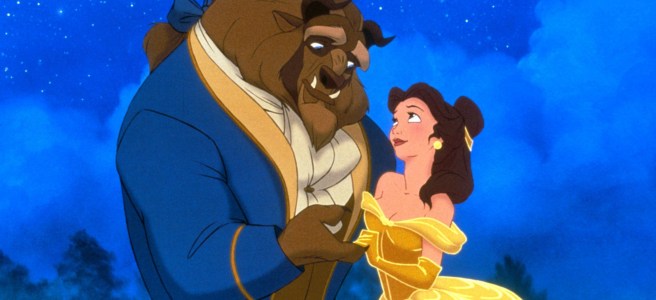
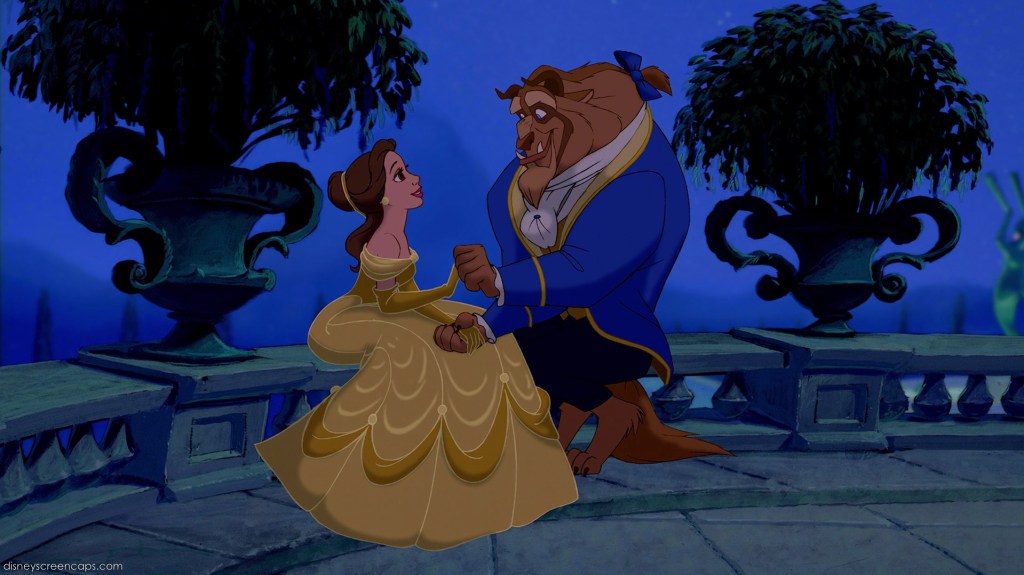
With Beauty and the Beast, the central relationship is given time to grow and develop. Both Belle and the Beast change throughout the movie and have significant moments of development that lead to the finale. Belle reminds the Beast how to care about others, and she brings out his softer side while helping him control his anger. Belle nurses the Beast’s wounds after he rescues her from the wolves, and the Beast offers Belle access to his library because he’s learned enough about her to know that will make her happy. It’s a great love story in the enemies-to-lovers vein.
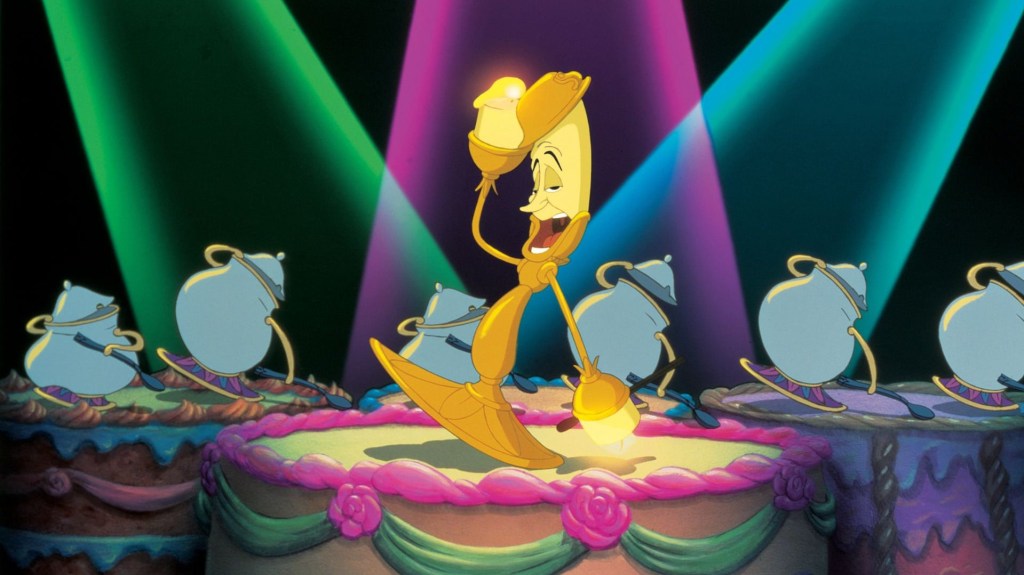
The movie is also bursting with some of the greatest supporting characters in Disney’s history. Lumiere, Cogsworth, Mrs. Potts and Chip all have their moments to shine, but even the more minor characters, from the wardrobe to the dog footstool, feel important and not just like background filler.
Perhaps most importantly for an animated film, the animation itself is truly stunning. Every frame could be printed out and hung as a painting. The character designs are unique and iconic, and the world is bursting with color. Beauty and the Beast is also one of the first Disney movies to mix 2D animation with 3D computer graphics. The iconic ballroom scene has 2D Belle and the Beast dancing through a 3D location.

Speaking of that ballroom scene, it’s impossible to talk about Beauty and the Beast without discussing the music. Disney has a rich history of iconic songs. “When You Wish Upon a Star” was written for its second feature, Pinocchio, and became so synonymous with Disney that it is still used as the de facto theme song for the studio today. Other early Disney movies featured iconic songs too, like Cinderella’s “A Dream is a Wish Your Heart Makes,” Peter Pan’s “You Can Fly,” Sleeping Beauty’s “Once Upon a Dream,” One Hundred and One Dalmatians’ “Cruella De Vil,” The Jungle Book’s “Bear Necessities,” and more.
But while these songs play important roles in those movies, I wouldn’t consider any of them to be musicals. That all changed in the Renaissance. Composers Howard Ashman and Alan Menken were brought in to work on The Little Mermaid after their success creating the musical Little Shop of Horrors. Their Broadway instincts, particularly Ashman’s, changed everything. Ashman and Menken developed The Little Mermaid, Beauty and the Beast, and Aladdin as Broadway-style musicals, with the songs becoming integral to the story. (It’s probably not surprising that what I consider the three best Disney songs are in these movies – “Part of Your World,” “Beauty and the Beast,” and “A Whole New World”).
Think about how much information is conveyed in the opening song of Beauty and the Beast, “Belle.” It sets up the entire dynamic of the world. We learn Belle’s mindset and motivation (“Every morning just the same” / “I want much more than this provincial life”), what the villain Gaston wants (“Just watch, I’m going to make Belle my wife”), and we see Belle’s relationship to the entire town (“Look there she goes that girl is so peculiar… What a puzzle to the rest of us, is Belle”). All in about four minutes.
Ashman and Menken would go on to win two Oscars for Beauty and the Beast, Best Original Score and Best Original Song for the title track, “Beauty and the Beast.”
Howard Ashman would sadly die from complications from AIDS during the production of Aladdin, but Alan Menken has been a staple of Disney animated features for over 35 years, composing music for nearly a dozen films.
The legacy of Ashman and Menken and their success with Beauty and the Beast, The Little Mermaid and Aladdin can still be found in Disney animated features today. Some of the best Disney soundtracks in recent years have come from Broadway songwriters like Kristen Anderson-Lopez and Robert Lopez, who wrote the songs for both Frozen films, and Hamilton creator Lin-Manuel Miranda, who worked on Moana and Encanto.
Disney has a powerful legacy of creating magical moments for all generations through their movies and theme parks. While the company has grown their reach through the acquisitions of Marvel, Star Wars, and Pixar, the heart of Disney will always be their animated films. Beauty and the Beast represents the perfect mixture of animation talent, remarkable storytelling, and memorable music. It’s no surprise then that it became the first animated film to ever be nominated for Best Picture at the Oscars.
Beauty and the Beast helped usher in the most celebrated and successful era in Disney history, became the gold standard for the studio, and will keep bringing new generations back to discover its magic for decades to come.

 Movies with Mitchell